Night-time Eating
The Quiet Pull of the Kitchen at Night.
Eleanor Whitfield
·
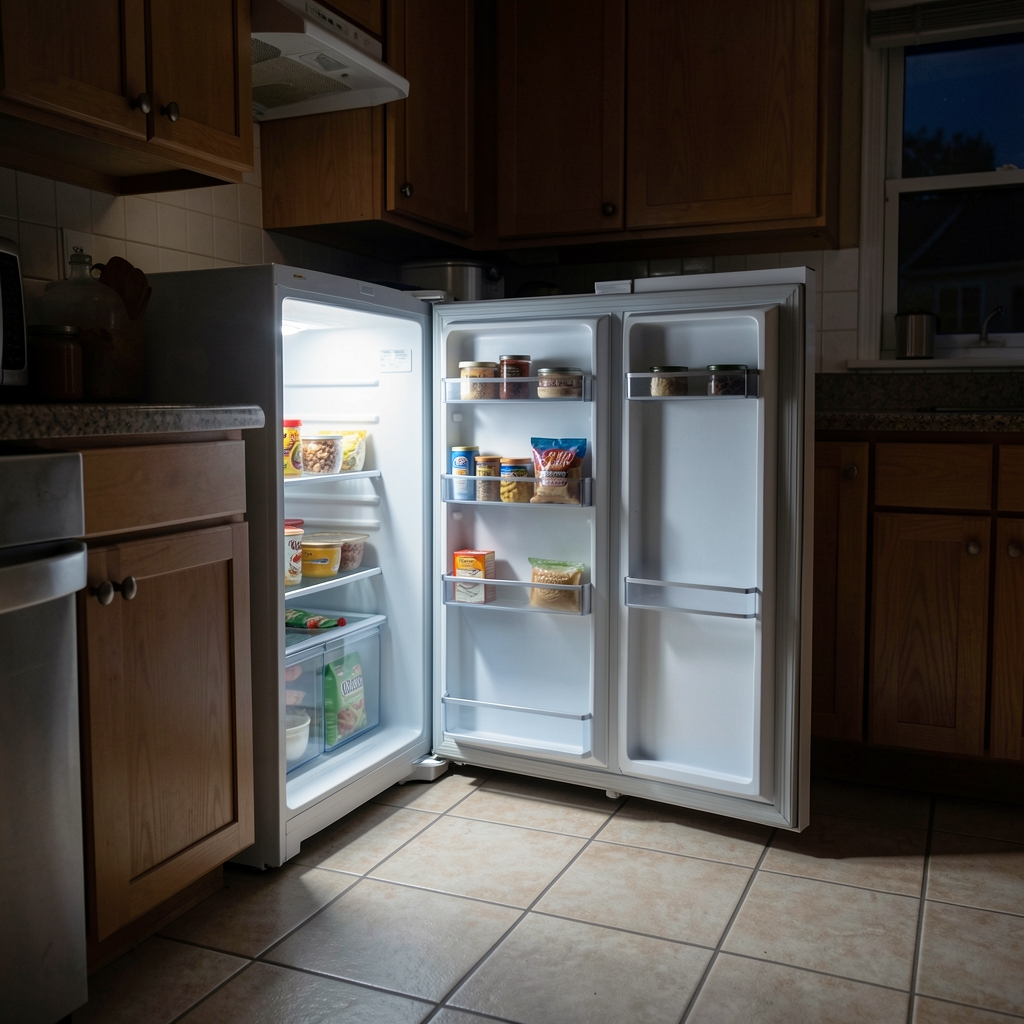
Boredom eating is one of the most misunderstood patterns in the broader territory of emotional eating. It tends to be dismissed as a trivial habit — a minor indulgence with an obvious solution. Yet the pull toward food in states of low stimulation is consistent, widespread, and rooted in the same fundamental mechanisms that drive many other forms of eating without hunger. Dismissing it as laziness misses what is actually happening.
The human attention system is designed for engagement. When the environment provides insufficient stimulation, the attention system does not simply rest — it seeks. It searches for something to anchor to, something that offers a reliable sensory response. Food, in this context, functions as an immediately available source of stimulation: it involves taste, texture, smell, and the physical sensation of chewing. It is, in the most literal sense, something to do.
This is why habitual snacking tends to cluster around certain predictable conditions: a lull in an otherwise busy afternoon, the gap between finishing one task and identifying the next, the first twenty minutes of a weekend morning before any structure has been imposed on the day. These are not hunger moments. They are attention moments — moments when the internal system is briefly unoccupied and reaches for something to fill the gap.
Understanding boredom eating as an attention phenomenon, rather than an appetite phenomenon, changes the nature of the response. The question shifts from "how do I resist eating?" to "what is my attention looking for, and are there other ways to offer it?" This reframing is not merely semantic; it substantially changes what kinds of adjustments are likely to be useful.
The profile of boredom eating is fairly consistent across different people and different contexts. It tends to involve foods that offer strong immediate sensory reward — salty, crunchy, sweet, or highly palatable combinations — rather than foods that require preparation or offer slow satisfaction. This preference reflects the attention-seeking character of the behaviour: the food is chosen for its capacity to deliver a quick, reliable sensory hit.
Boredom eating also tends to happen quickly. Without hunger to slow the process — without the pleasure of anticipation, the satisfaction of finally eating after genuinely wanting food — the eating often moves at pace, with less attention to flavour and more attention to the act of consumption itself. There is a mechanical quality to it that, for many people, becomes apparent only in retrospect, when they find themselves at the end of a packet with only a vague memory of having started it.
This lack of attentiveness to the eating experience is one of the more useful signals. When food is eaten with attention — when the flavour is noticed, the texture registered, the pace deliberately slowed — boredom eating tends to resolve itself naturally. The act of paying attention to eating is already something for the attention system to do; it provides the engagement that boredom was seeking.
This is the core insight of mindful eating awareness as it applies to boredom: attention is the missing ingredient. Not willpower, not restriction, not a list of foods to avoid. The practice of simply noticing what one is eating, why, and what it tastes like is sufficient, in many cases, to interrupt the automatic character of boredom eating.
"Boredom is not a trivial state. It is the experience of a mind that knows it has capacity and cannot find an appropriate use for it."
Many habitual snacking patterns begin not as emotional responses but as structural ones. A person starts eating at 3pm every afternoon not because they are hungry or upset, but because the 3pm slot is when the morning's momentum runs out and the afternoon has not yet found its rhythm. The snack fills a transitional gap in the daily structure. Over time, it becomes a cue — the body and mind begin to expect food at 3pm, and the expectation itself generates something that resembles hunger.
This is how eating triggers become embedded. A trigger is not always a feeling or an event. It can be a time of day, a location, a physical posture, a sequence of actions. The person who always eats when they sit on the sofa is not necessarily hungry when they sit on the sofa — but the sofa has become a trigger through repeated association, and the body responds accordingly.
Identifying these structural triggers through food journalling can be illuminating. A week's worth of honest notes about when eating happened, what preceded it, and what the physical context was tends to reveal patterns that are invisible in the moment. The 3pm slot, the post-commute raid on the kitchen, the mid-morning desk snack that always follows a particular kind of meeting — these become visible as patterns rather than individual, independent choices.
Once a trigger is visible as a trigger, it becomes possible to respond to it differently. Not necessarily by removing the snack — sometimes a 3pm break involving food is a genuine and reasonable part of a person's day — but by choosing it rather than being moved by it. The distinction between a chosen routine and an automatic response is a quiet but significant one.

Habitual snacking — pattern observation, London 2026
Weekend eating patterns deserve particular attention in any consideration of boredom eating, because the weekend is precisely where the structural props that govern weekday eating are removed. Meals become less regular in timing. The breaks between activities are longer and less well defined. The social context of eating — the office lunch, the commuter coffee — is absent. In its place is a more open, less structured stretch of time that many people find, without fully articulating it, somewhat uncomfortable.
This discomfort is not a character weakness. It is a natural response to the removal of external structure that has been providing regulation throughout the week. The weekday schedule, whatever its frustrations, tells a person what to do at each hour. The weekend provides no such instruction. For people whose internal structure is less developed, this openness can feel like a kind of low-grade anxiety — and food is one of the more reliable ways of soothing low-grade anxiety.
A useful approach to the weekend eating pattern is to bring some of the structural thinking of the weekday into the weekend, without importing the weekday's rigidity. Deciding in the morning roughly when meals will happen — not rigidly, but approximately — gives the day a light skeleton that reduces the number of unstructured gaps in which boredom eating is most likely to occur.
It is also worth noting that some weekend eating is genuinely pleasurable and deserves to be. A long, relaxed Saturday lunch with good food and unhurried time is not a boredom eating pattern — it is one of the pleasures of a well-ordered week. The distinction, again, is awareness: eating that is chosen, attended to, and genuinely satisfying is different in character from eating that happens in the background of a day that hasn't quite found its shape.
Boredom eating and distracted eating overlap considerably. Both tend to happen in conditions of low attention to the eating itself. In both cases, the fullness cues that the body sends — the slight shift in the sensation of hunger, the gradual diminishment of the appeal of the food, the sense of having had enough — are available but not received. The person continues eating not because they are still hungry but because the signal of sufficiency has not been noticed.
Recognising fullness cues is a practised skill, not an innate ability. Most people's relationship with these signals has been complicated by years of eating under conditions that made attending to them difficult: rushed meals, eating while working, social pressure to finish a plate. Relearning to notice the point of sufficiency takes time and, more importantly, conditions that make noticing possible.
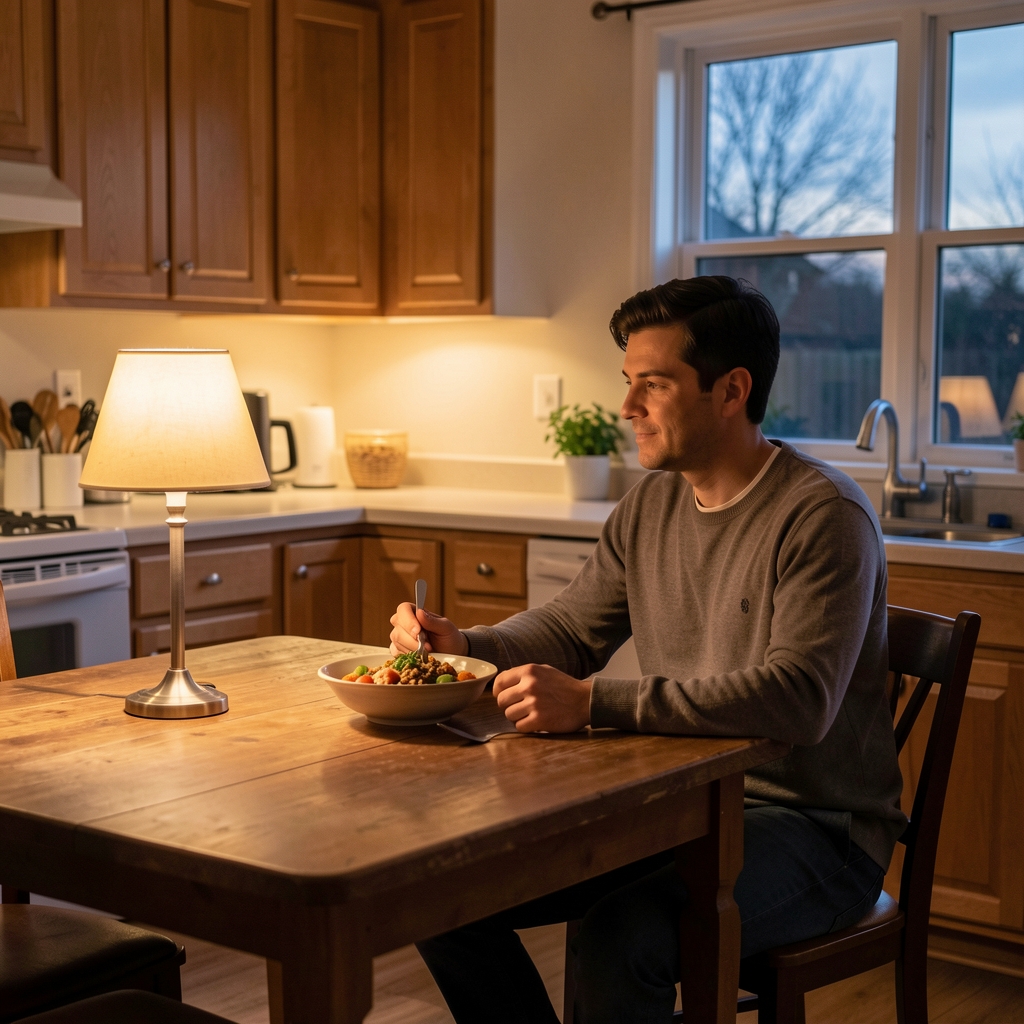
Those conditions include: sitting down to eat rather than eating while standing or moving; eating without a screen in the immediate visual field; eating at a pace that allows the fullness signal to arrive before the food is gone; and pausing mid-meal, at least occasionally, to check in with what the body is actually communicating. These are not demanding practices. They are simply conditions of attentiveness, applied to a part of the day that most people conduct on automatic.

Eleanor Whitfield is the founding editor of Tarino Gazette. Her writing focuses on everyday wellness practices, eating rhythms, and the quieter aspects of how people relate to food.
More from this author