Eating Triggers
Boredom at the Table. When Eating Fills the Absence of Purpose.
Eleanor Whitfield
·
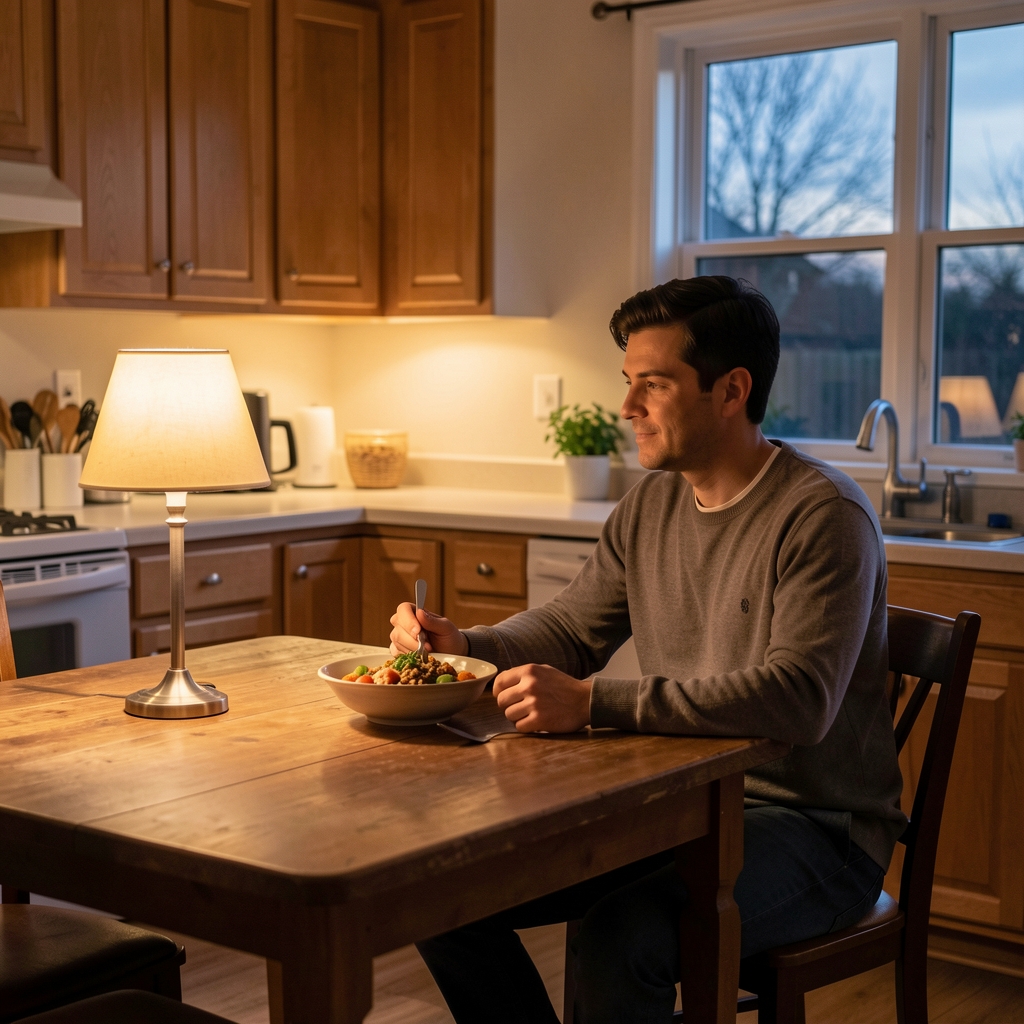
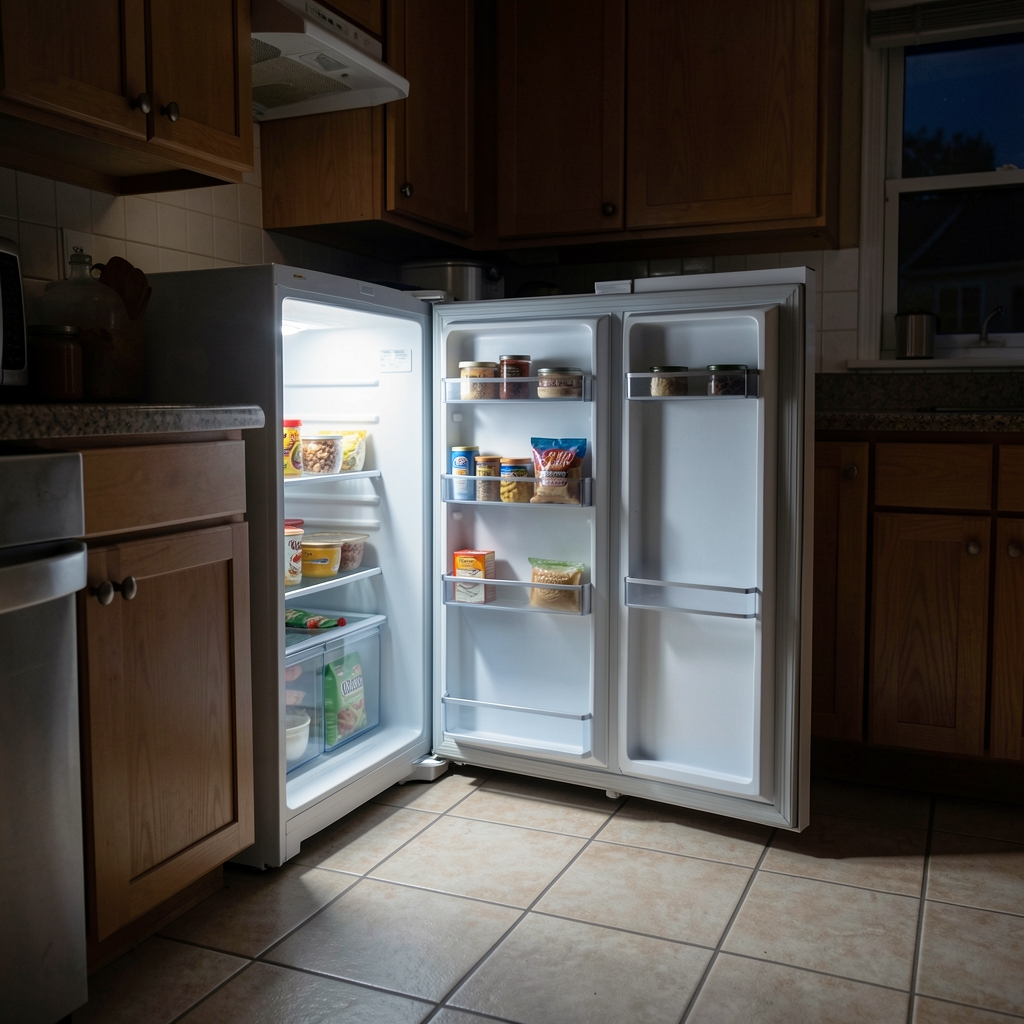
There is a particular quality of stillness that settles over a house late in the evening — a stillness that, for many people, seems to arrive alongside a sudden, inexplicable pull toward the kitchen. It is not appetite in the conventional sense. The body is not asking for fuel. Something else is at work, something quieter and more habitual, rooted in the rhythms of how the day unfolded.
The connection between food and mood shifts in the evening hours in ways that daytime eating rarely does. During the day, there are schedules, meetings, social norms around mealtimes — all of which provide a kind of external structure that limits how freely we respond to internal cues. When those structures dissolve after nightfall, the relationship with food becomes less governed by routine and more responsive to emotional state.
Research into eating rhythm consistently notes that caloric intake in the evening hours tends to be less governed by physical hunger signals. The body's sense of fullness operates on a slight delay at any hour, but this delay becomes more pronounced when attention is divided — when the television is on, when a phone is in hand, when the mind is still processing the residue of a long and uneven day.
This is the terrain of distracted eating: not a failure of intention, but a natural consequence of diminished attention. When awareness narrows onto a screen or a conversation, fullness cues arrive but are not registered. The hand reaches for food and continues reaching, not because the body demands it, but because nothing redirects the motion.
"The kitchen at night is not merely a place to eat. For many, it becomes the place where the day's accumulated weight is set down, briefly, in the act of eating."
Emotional hunger and physical hunger share a surface resemblance — both prompt eating, both feel urgent in their own way — but they differ in several observable respects. Physical hunger builds gradually, tends to appear after several hours without food, and is satisfied relatively easily. Emotional hunger, by contrast, tends to arrive suddenly, often with a specific craving rather than a general appetite, and tends to persist even after eating.
One of the more useful distinctions in mindful eating awareness is the question of location. Physical hunger is felt in the body — a familiar hollowness, a slight energy dip, an awareness of the stomach. Emotional hunger tends to be felt higher up, in the chest or the throat, and is often accompanied by a sense of tension or restlessness that food does not fully resolve.
This distinction does not imply that emotional eating is wrong. It is a deeply human response, woven into the way food and care have been linked throughout a person's history. A warm meal can carry genuine comfort; the act of preparing something in the kitchen can be a form of self-attention. The question of whether the eating is serving the person well is a separate one from whether the hunger is emotional.
What food journalling offers, in this context, is not a tool of restriction but of observation. When a person notes what they ate, what they felt before and after, and what the moment around the eating looked like, patterns become visible that are otherwise invisible. The act of writing down "9pm, half a packet of biscuits, tired and quietly annoyed about something said in a meeting" is not self-criticism — it is information.

Food journalling as observation — London, 2026
The eating environment matters considerably more than is commonly acknowledged. Studies in attention and eating behaviour have consistently found that the physical context of eating — where a person sits, what surrounds them, whether they are alone or with others — shapes the eating experience in measurable ways. An environment that encourages habitual snacking tends to make habitual snacking more likely, regardless of hunger state.
For many people, the sofa-and-screen combination is one such environment. Food consumed on a sofa in front of a television tends to involve less awareness of portion, slower recognition of fullness, and a greater tendency toward comfort food choices — not because the person lacks knowledge, but because the environment does not prompt awareness. The bowl is on the lap. The hand moves automatically.
Small environmental adjustments can interrupt this pattern without requiring discipline. Placing food out of the immediate visual field — back in the kitchen rather than on the coffee table — introduces a pause between impulse and action. That pause is often enough for a fuller awareness to arrive. The person may still choose to eat, but they do so with more information about what is driving the choice.
The weekend eating pattern is another variant of this environmental effect. Without the structure of the working week, meals become less predictable in timing and composition, and the occasions for eating in response to boredom or low-level restlessness multiply. Recognising the weekend as its own distinct eating context — and preparing for it with the same light attention one might bring to any routine change — tends to make the weekend a less disrupted period.
Eating pace is one of the more consistently underestimated variables in the food and mood connection. The body's fullness signals operate on a roughly twenty-minute lag from the start of eating — a lag that, when eating pace is rapid, means the body receives the fullness signal only after a considerable amount has already been consumed. Slowing down at mealtimes is not an aesthetic recommendation; it is a practical adjustment to a physiological reality.
For people accustomed to eating quickly — at a desk, standing in a kitchen, in the car — slowing the pace requires conscious attention rather than mere intention. Placing cutlery down between bites, chewing more completely, pausing mid-meal for a breath or a sip of water: these are not elaborate practices. They are moments of redirection that allow the body's own fullness signals time to arrive and be registered.
Mindful portion awareness follows naturally from a slower eating pace. When a person eats with more attention, the point of satisfaction tends to arrive more clearly. This is not the same as restriction — it is a fuller registration of what the body is communicating, rather than eating through those communications until the meal is simply gone.
The relationship between stress and food is not a simple one, and it does not run in a single direction. Some people in states of heightened stress eat more; others eat less. Some lose interest in food entirely during periods of sustained pressure, only to find the appetite returns in a kind of rebound once the pressure eases. Neither pattern is universal, and neither is a character flaw.
What does appear consistently in the literature on eating and emotional state is that stress tends to narrow the range of foods a person reaches for. Under pressure, the pull toward familiar, dense, high-palatability foods becomes stronger. These are the comfort food habits — not arbitrary preferences, but deeply embedded associations between certain tastes and a sense of relief or safety.
Understanding this as a pattern rather than a failing changes the register of the conversation. The goal is not to suppress the impulse but to become sufficiently aware of it that the choice remains a choice. A person who recognises that they are reaching for biscuits because the day was difficult, rather than because they are hungry, still has the option to eat the biscuits — but they also have the option to consider whether something else might serve the moment as well.

Eleanor Whitfield is the founding editor of Tarino Gazette. Her writing focuses on everyday wellness practices, eating rhythms, and the quieter aspects of how people relate to food.
More from this author